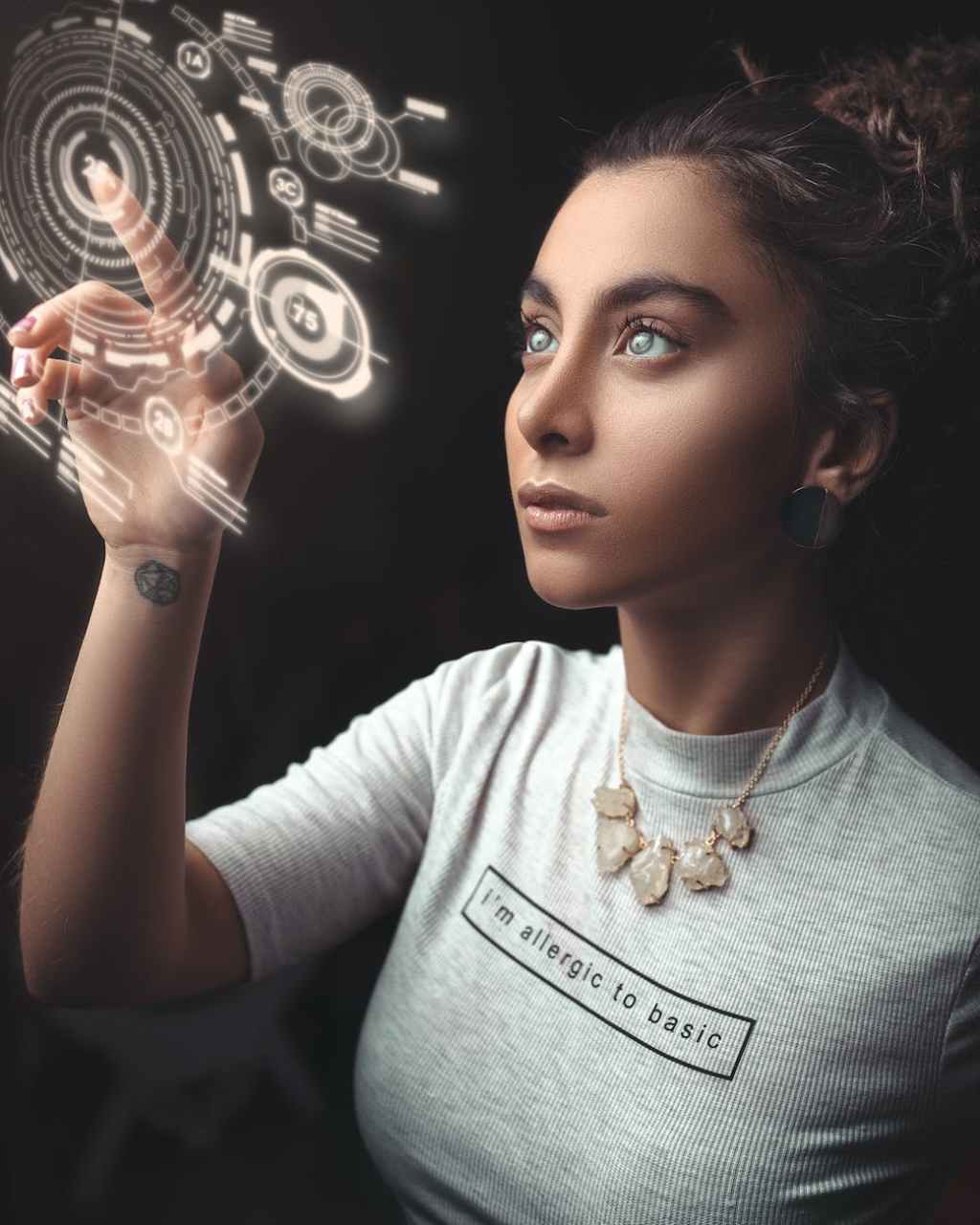
In a previous post Paradigm Shift, I discussed the implications and effect the launch of ChatGPT was creating and the paradigm shift that the education sector especially was finding itself in. The rapid technological advancements and increasingly diverse society are causing a much-needed seismic shift in how we view education. The education system that we know today was set up based on the needs of society in the late 1800’s early 1900’s. While there have been some changes and progression, the basic system has not changed. Artificial Intelligence (AI) gives us an opportunity to revaluate our education system especially the high schools. I dream of a new education system, imagine a place not confined to the daily routine of bells and rigid class schedules, but a vibrant community hub that fosters lifelong learning for individuals of all ages, abilities, and vocations.
The Need for Transformation
The traditional high school model, with its emphasis on age-based cohorts, fixed curriculum, and standard testing, often fails to account for individual differences in learning pace and interests. A good example is my own daughter, this is from primary school, but you’ll understand the link. From a very early age she loved patterns and numbers and enjoyed learning basic facts and times table. She would get 10/10 every time we gave her equations to solve and would complete them fast. In the classroom when the teacher ‘tested’ her and ‘timed’ her she would freeze and complete less than 5. She would get them correct but she wasn’t able to complete the required number of equations in the specified amount of time to move up a level. While she could do advance maths for her age, she was kept at this entry level for nearly a year. Finally, the teacher realised that there was no point keeping her there and moved her up. My daughter carried on excelling in maths and is currently completing a science degree with a double major in chemistry and maths. In this scenario it is the education system that is at fault not the teacher, I am grateful that the teacher was able to see sense and step outside the boundaries, my daughter is still not able to complete basic facts under timed conditions! 😊 Moving back to the traditional high school model, it generally operates separately from the broader community, missing out on opportunities for real-world learning experiences and multi-generational interactions.
When I think about my education and time spent at high school, I relate well to Paulo Freire accusation of the ‘banking model’. In his seminal work, “Pedagogy of the Oppressed,” Freire argues that schools are places where knowledge is simply deposited into students. I know I’m not the only student that felt I was being talked at for six hours, five days a week and continuously wondered what the purpose was. I must share a funny story, when I was in year 9 my English teacher with huge amounts of passion told us that we were heading into the next ice age and exhorted us to make sure we prepared for it. I can’t remember any details but with the current global warming and climate change issues we are facing, I don’t think I’ll live long enough to worry about the next ice age 😊. I digress, back to Freire. He advocated for a problem-posing model, where learners actively engage with and critically reflect upon their reality. The education hub I dream about is a new education system where high schools are epicenters of learning, innovation, and community engagement. Vibrant hubs for dialogue, critical thinking and mutual learning. These hubs are not bound by the traditional age-grade progression and instead welcome learners of all ages, abilities, and backgrounds to upskill or reskill. In this hub, everyone is both teacher and learner, allowing anyone with expertise or passion to teach, while also enabling everyone to be a learner…. A life-long learner.

A day in an Education Hub
The hub is a learning space, not classrooms but areas that people can collaborate, network and hang out. There are specialist spaces with tools and equipment eg woodworking, music, dance, art, digital, the list is endless. Let us imagine what a day would look like in this hub, a retired engineer volunteers to guide a robotics club in the morning. Simultaneously, a group of teenagers works with a local entrepreneur on a community sustainability project. In another area, an adult learner is brushing up on digital skills through an AI-powered personalised learning program. Through these experiences, young students gain practical skills and exposure to diverse career paths, adult learners continue their educational journey, and the community becomes a vibrant, shared space for mutual learning and growth. It fosters a sense of shared responsibility for education where learners critically engage with the world around them and gain an understanding of the challenges of society.
Without the resources (people and finance) and ‘system’ to support this idea it will remain an education utopia. And yet the advent of AI has sparked a radical transformation with higher education standing at the crossroads of this change. As educators we are both witnesses and agents in this shifting landscape. Will we even need a ‘system’? Will the utopia become a reality?
The Changing Face of Education
The potential of AI in education and I refer to high schools and higher education is multi-faceted. From personalised learning experiences and smart tutoring systems to data-driven academic advising and administrative efficiency, the possibilities seem limitless. I must ask the question; will the future still have a need for traditional high school qualifications and degree programs? The future job market is calling for people with a new set of skills and I am watching young 20-year-olds networking and pursing their interests and passions, working in roles I’ve never heard of or imagined and earning large salaries without having gone near a university.
It is hard to look into the future and forecast what will change but as AI takes over more mundane tasks, I believe humans will seek connection with each other more and more. For example, I appreciate having a bot answer a question out of normal work hours quickly and reliably, at the same time I appreciate it when I do speak to someone who answers the question just as quickly and reliably but can have a joke a laugh and connect. I wonder if future education hubs (schools) and higher education become more about teaching humans how to be human. I wonder if they will morph into being spaces where people can engage with interdisciplinary thinking, creativity, critical analysis and problem-solving blended with micro-credentials for specialized skills. In my opinion micro-credentials are currently underrated and I see a big future for them. The micro-credentials that are offered can change and be adapted to remain current and align closely with the needs of the job market. They allow people to continue their journey of learning and upskilling and to demonstrate competency in a specific skill area relevant to their line of work without sacrificing 3-5 years of study and a huge financial cost.

In a previous post I was asked the question if there was still a future for teachers. I believe there will always be teachers, maybe not in the traditional sense, as in standing in front of a classroom, but more in the sense of connecting humans to humans, transferring, and sharing of knowledge. Skilled teachers have the ability to draw out the best in a person/student, ask questions and guide them to find their own solutions, and at the same time adding to their own kete (basket of knowledge). In the ever-evolving tapestry of education, may you forever remain curious weavers, weaving not just for today, but for a lifetime of discovery and growth.
 Loving Change and All things Learning
Leave a comment