We know those people born in the early 1900’s have seen remarkable change, they have seen and experienced the first of many commodities that we now take for granted. Commodities such as the telephone, electricity, waste water system. While we marvel at the changes and global events that they have endued and adapted to, I heard an economist recently say that with artificial intelligence embedding itself in our lives, we are currently in the midst of rapid change and yet it will be the slowest yet to come. So fellow readers buckle up for a fast ride to who knows where? 😊 I jest a little. While trying to keep up with this fast pace, it is easy for humans to lose sight of our roots and individual identities. We are constantly bombarded with new trends, ideas, and information that can keep us sprinting from one thing to another without knowing why and we can get lost in the jungle of information. It’s hard to see into the future when it’s blurry, we can’t see where we are going or what is coming next which causes feelings of anxiety.
Understanding our identity and where we come from is key to our well-being, it provides a sense of grounding like an internal compass. When the road becomes a little rocky, we can return to knowing where we came from and who we belong to, we find our internal compass and look to our north. Dr. Carl Rogers developed the humanistic theory of psychology. He believed that a person could reach their goals and dreams if their environment or sense of belonging is right. Like a plant that needs sunshine and water, Rogers says that individual’s need ‘genuineness, acceptance and empathy’ to grow and flourish.
Knowing our identity and who we are helps us recognise our values and beliefs, when we know this, we can navigate challenges that come across our path and embrace opportunities. It is a worthwhile exercise to write down or articulate your values and beliefs, who you are.
A sense of belonging
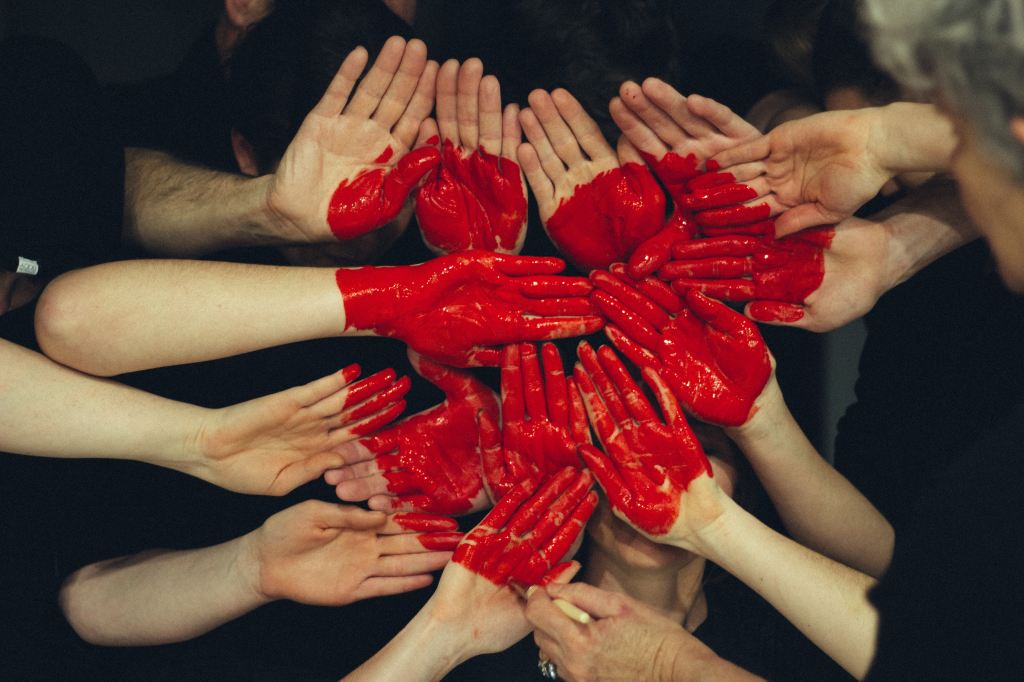
Being connected to our roots (our ancestral history) and family gives us a sense of belonging. Maslow in his hierarchy of needs theory states that belonging is one of the fundamental human needs – he rates it third on the pyramid. Simon Senek (The Optimism Company) believes Maslow has this wrong, we can go without food and water and shelter for a while, but we can’t go without human interaction and connection and says it should be first on the pyramid. We have all experienced or witnessed the importance of human interaction recently with the Covid lockdowns. In New Zealand the Māori place an importance on their Pepeha, this is an introduction to who you are and where you are from. It connects you to a place and a people or family that are important to you. It allows others that you are engaging with to find something familiar with or interesting to connect with you. When we understand our cultural, familial, and personal backgrounds, we feel a deeper connection to those around us and to society at large. It helps us to foster mutual respect and appreciation. I want to extend the meaning of family to any group we belong to. It could be a sports team, craft group, church, or your workplace any group that we spend regular time with and connect with. This sense of belonging is fundamental to our self-worth and self-esteem.
Guided Decision Making
Our identity, values and who we belong to serves as a foundation or framework from which we approach different situations. They serve as our compass, providing a sense of direction when faced with choices. For example, if we value time spent with family, we may choose a job that allows us to spend more time at home even if it pays less. Knowing our identity and what is important to ourselves gives us consistency in our actions and decision making, helps us with long-term planning and goal setting. It can help us write or rewrite our future.
Resilience Amidst Adversity
Articulating and understanding our identity and origins fosters resilience. Studies suggest that people who have a strong sense of their backgrounds and identities can cope better with adversities and are less prone to mental health issues (Walsh, 2006). By anchoring ourselves in the knowledge of who we are and where we come from, we are better equipped to face life’s storms. We can understand the reasoning for our decisions and predict how we will respond when faced with challenges. I love the following story which illustrates three different ways we can respond to adversity.

Carrots, Eggs and Coffee Beans.
A young woman went to her mother and told her about her life and how things were so hard for her. She did not know how she was going to make it and wanted to give up. She was tired of fighting and struggling. It seemed that as one problem was solved, a new one arose.
Her mother took her to the kitchen. She filled three pots with water and placed each on a high fire. Soon the pots came to a boil. In the first she placed carrots, in the second she placed eggs, and in the last she placed ground coffee beans. She let them sit and boil, without saying a word.
In about twenty minutes, she turned off the burners. She fished the carrots out and placed them in a bowl. She pulled the eggs out and placed them in a bowl. Then she ladled the coffee out and placed it in a bowl.
Turning to her daughter, she asked, “Tell me, what do you see?” “Carrots, eggs, and coffee,” the daughter replied.
Her mother brought her closer and asked her to feel the carrots. She did and noted that they were soft. The mother then asked the daughter to take an egg and break it. After pulling off the shell, she observed the hard-boiled egg. Finally, the mother asked the daughter to sip the coffee. The daughter smiled as she tasted its rich aroma. The daughter then asked, “What does it mean, mother?”
Her mother explained that each of these objects had faced the same adversity—boiling water. Each reacted differently. The carrot went in strong, hard and unrelenting. However, after being subjected to the boiling water, it softened and became weak. The egg had been fragile. Its thin outer shell had protected its liquid interior, but after sitting through the boiling water, its inside became hardened. The ground coffee beans were unique, however. After they were in the boiling water, they had changed the water. Who are you? What are your values, your identity? When adversity knocks on your door, how do you respond? Are you the carrot that seems strong, but with pain and adversity do you wilt and become soft? Are you the egg that starts with a malleable heart but changes with the heat becoming hardened? Or the coffee bean that changes the circumstances around you, in the midst of adversity releasing a pleasing fragrance and flavour?
Who are you?

Please subscribe to receive posts in your inbox. 🙂
 Loving Change and All things Learning
Leave a comment