Is your cup half full?
If you’re feeling busy, then you are too busy.
Photo by Esranur Kalay on Pexels.com
A wonderful friend gave me a gift, it was a custom notepad with self-care headings to fill in and journal. It was pad of paper titled ‘This is just for me’. I was touched but as I looked at the headings that I had to fill in, “moments for me’, something nourishing, something fun …. I smiled and said to her ‘I’m going to struggle to fill this in’. I knew I was in a season of busyness, but it was only when I looked at that notepad that I realised how busy and how empty my emotional cup was.
But I was o.k.
Busyness
We all have busy seasons where circumstances beyond our control squeeze and reduce the hours we have available to take care of ourselves and stop to take a breath. In these times we should focus on the light at the end of the tunnel and know that it won’t be long before the busyness is over and we can stop, take that breath and recalibrate. During that time we are constantly drawing on our resources in our emotional cup to keep balancing and juggling our commitments so that we don’t get too overloaded. When I looked at this lovely gift, I knew my cup was not only empty but I was scraping the bottom and I realised I needed to do something right now to fill it so I could cope with life’s challenges. For me, amongst other things, meditation is what fills my cup and I thought to myself “I must fit this in somehow each day”.
But I was still o.k.
What I didn’t anticipate was the blow that came from left field – a comment from someone close to me that pierced my heart. In normal circumstances with my cup full I would have fielded that comment and like an arrow glancing off a shield it would have lain discarded and I wouldn’t have given it another thought. However, it struck home and brought me to my knees. I was fumbling around trying to get myself upright when the avalanche of hurt hit. Emotionally I tumbled around getting smashed from every side. In a real avalanche, we are told a person should attempt to swim with the descending snow, I tried to swim with it but wasn’t strong enough.
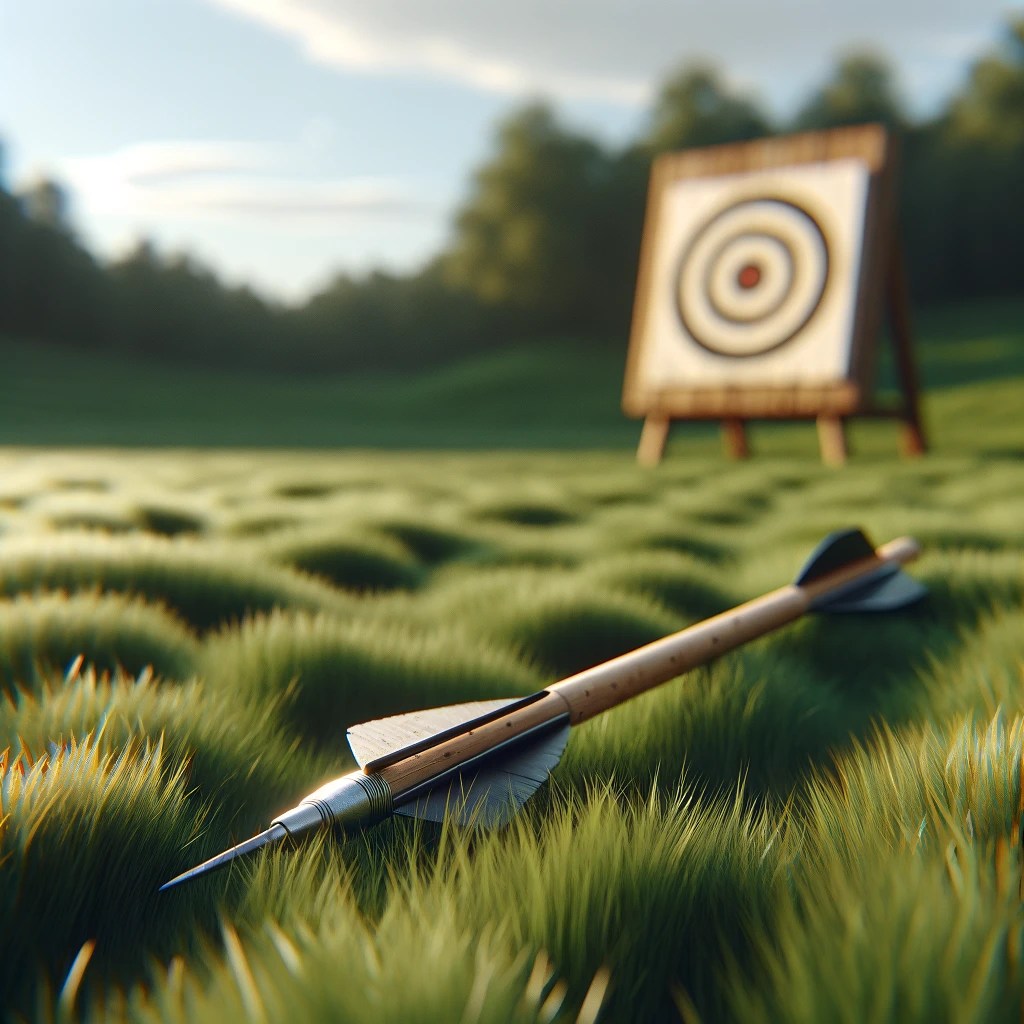
Photo created by CHATGPT V4: 11/5/24
I wasn’t o.k.
We all go through difficult and challenging times, we need to, to be able to grow and become better versions of ourselves. When our cup is full, we can cope and ride through these seasons unscathed but still having learnt what we needed to. In fact, when our cup is full, we should embrace these seasons knowing the outcome will be fabulous. But only when our cup is full.
Running the race of life is a lot like an endurance athlete and our emotional resilience and reserves is to us what the mind and will power is to the athlete. When an athlete is nearing a finish line their physical body is often depleted of energy, air and strength, but they dig a bit deeper grasp a sliver of hope and determination that keeps their body moving and across the finish line.
Similar to an endurance athlete at the end of their race, when we are faced with overwhelming hurt, grief, or trauma, it’s natural to feel utterly depleted – both mentally and physically. We can feel exhausted and feel that we have nothing left to give. It makes the basic tasks of daily living feel like insurmountable obstacles and finding the strength to keep going can require an immense act of courage and determination.
In these times when we are scraping the bottom of the cup and feeling buried we need to look up and look for that glimmer of hope. It requires tapping into an inner well of resilience that may have previously lain dormant. It’s about finding the resolve to take that next step, even when every fiber of your being is screaming out for you to give in and give up.
The glimmer of hope can come in many different ways, often from our own community or tribe of belonging but can also be from a stranger who makes a comment in passing. The important thing is to keep looking up (and around) looking and listening for that glimmer of support and hope. I was fortunate and grateful to my tribe that I saw hands reaching out and I was able to grasp on to them and slowly but surely be pulled to the surface to take that breath.

I was going to be o.k.
In a real avalanche operation rescuers use a strategic and systemic approach to ensure the safety of the buried person. If they don’t, they put themselves as rescuers and the victim at risk. They can waste resources with people attempting to do the same job and getting tired. Likewise, as part of a community we need to be aware of each other and ready to support each other when in need. But as a support person we also need to be aware that we might not be the person that is at the front line, our support may come in later or never and that’s o.k.
Self-Care
For ourselves the process of healing begins with small, incremental acts of self-care and self-preservation. It might be as simple as forcing yourself to take a few deep breaths, or to drink a glass of water when you can’t remember the last time you’ve eaten. It’s about momentarily shifting your focus away from the pain and towards the basic needs of your physical and emotional well-being. A self-care notepad comes in handy as it helps to remind us what conscious and deliberate actions we need to do to take care of ourselves, and each day we feel a spark of progress, and a little more strength returning.
These actions can be very small, you just need to identify them. Going for a walk, finding something to be grateful for, taking a bath, tidying a messy drawer, meditation, reading one chapter, watching a movie, connecting with someone, whatever helps you relax and brings a sense of peace.
Resilience
As we take each step, we find that our reserves of strength and resilience grow stronger. The hurt or grief may never fully disappear, but we discover that we have the capacity to carry it, to integrate it into our life in a way that allows us to move forward, even if the path ahead is difficult and uncertain. Dr Lois Tonkin suggests a framework to help us understand how to integrate our hurt into our lives. Rather than moving forward or ‘getting over it’, and hoping our grief or hurt will shrink or slowly disappear, we learn to hold it in place and instead we grow stronger and bigger to surround it. This illustration explains it better.
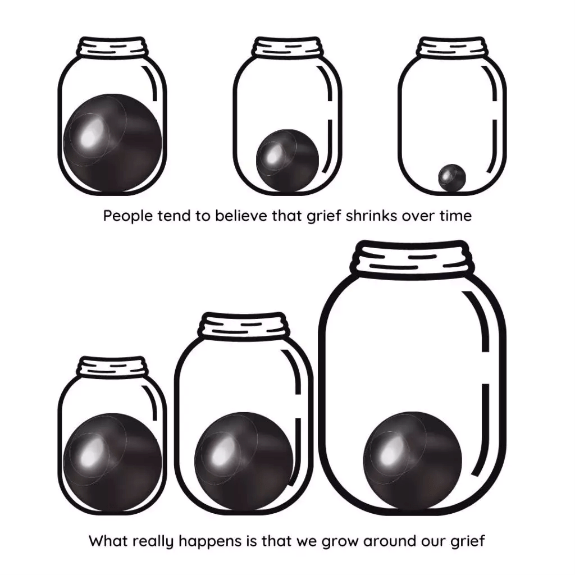
The Ralph Site created this image based on the concept put forward by Dr. Tonkin.
I am o.k.
If you’re feeling busy, then you’re too busy. It is our own individual responsibility to keep ourselves in balance, like a conductor and an orchestra, we keep our emotions and feelings in balance, but this is a whole other conversation that we can discuss next time 😊
To receive these posts in your inbox please subscribe, remember to check your inbox and confirm your subscription.
 Loving Change and All things Learning
Leave a comment