The Power of the Pebble.
Have you ever had that overwhelming feeling of having so much to do, but no idea where to start. Whether it’s a big work project, a personal goal you’ve been meaning to tackle, or just the never-ending stream of daily tasks, it’s easy to feel paralyzed and if you’re like me your brain synapses just don’t seem to ‘synape’. 🙂 “You can’t see the wood for the trees’ is another metaphor to describe the feeling.

I know the struggle all too well. A few months ago, I was feeling completely bogged down, struggling to make progress on my goal of writing and publishing a book. The task felt monumental – I couldn’t work out how to find the time and energy to to sit down and start writing. Then when I did manage to open my laptop, I’d stare at the screen thinking about all the jobs and chores that I needed to do, and end up closing my laptop in defeat.
Sound familiar? 🙂 Well know that you’re not alone and there is a way forward. We can achieve those big goals with smaller steps.
The Power of Small Steps
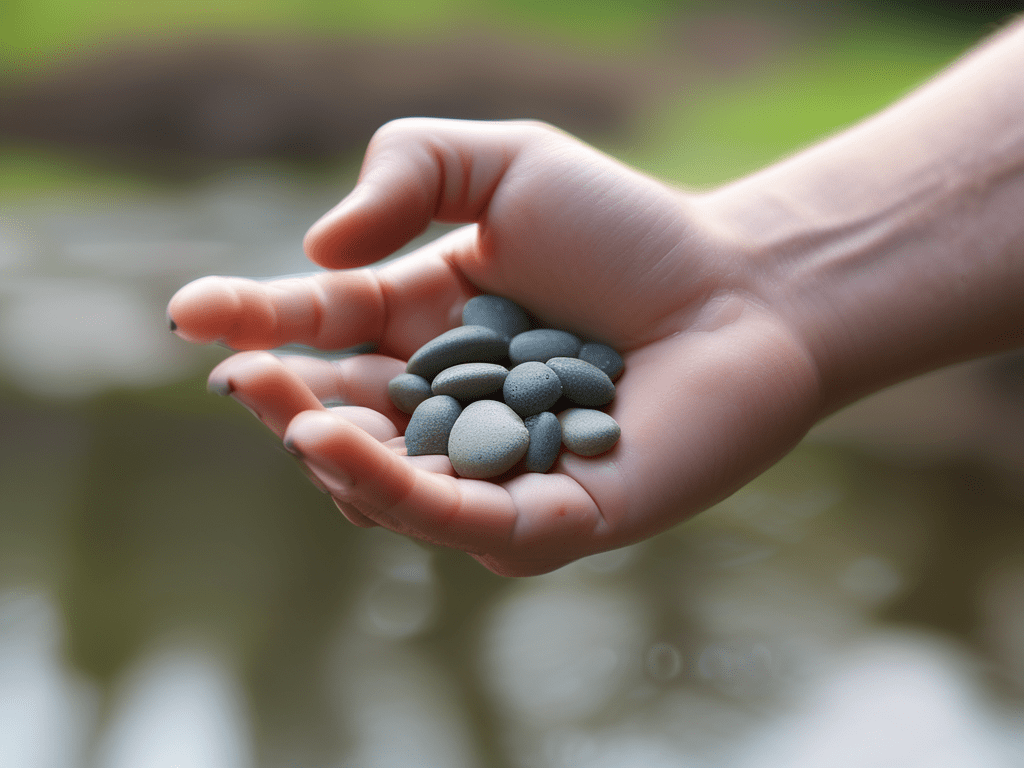
The pebble in the pond is a metaphor about tackling big, daunting goals one small step at a time. Just like throwing a pebble into a pond creates a ripple effect that gradually grows larger, when we take consistent, incremental actions towards our goals, we can build momentum which in turn leads to significant progress.
When you break down your goals into smaller, more manageable steps, you are much more likely to follow through and achieve those goals. Researchers suggest that this is because smaller steps feel more doable and less overwhelming, which boosts our motivation and perseverance (Nawaz, 2020).
Finding Your First Pebble
So, how do you apply this metaphor to your own life? Start by identifying the “big rock” of a goal that’s been weighing you down. Maybe it’s writing that book, learning a new skill, or finally organizing your home office. Whatever it is, resist the urge to try and tackle the entire thing at once.
Look for your first “pebble” – a small, easy-to-accomplish action you can take right now. It doesn’t have to be anything groundbreaking; the key is that it’s doable and won’t leave you feeling drained. Maybe it’s spending 15 minutes brainstorming book ideas, or clearing off one shelf in your office. The specific action isn’t as important as the fact that you’re taking that first step. Make sure you know and are aware of what you have accomplished, no matter how small. I find it rewarding to write a list of things I need and would like to do each week. Crossing them off when completed gives me a great sense of achievement, which in turn helps my mental health.

Building Momentum
Once you’ve thrown that first pebble, the real magic happens. Just like the ripples on a pond, that small action will start to create momentum. Maybe you feel a surge of motivation and end up spending 30 minutes writing instead of 15. Or perhaps clearing that one shelf inspires you to tackle another.
The important thing is to keep throwing those pebbles, day after day. Harvard researcher Teresa Amabile suggests that making consistent, incremental progress is one of the biggest drivers of workplace motivation and creativity. And the same principle applies to our personal goals as well.
Breaking down larger goals into smaller, more manageable steps not only makes the task less daunting, but it also helps to build momentum and a sense of accomplishment. Each time you complete a smaller goal, you can take a moment to celebrate your progress and recognize how far you’ve come. This sense of accomplishment can serve as a powerful motivator to keep pushing forward towards your larger goal. Setting and achieving smaller goals can also help to build confidence and self-efficacy, which can ultimately lead to greater success in achieving larger goals.

Start Now
Setting and achieving small goals can be a powerful tool for achieving larger objectives, building motivation, and fostering a sense of well-being. By breaking down your larger goals into manageable steps and celebrating your progress along the way, you can create a positive feedback loop that keeps you moving forward. So why not give it a try? Identify a goal that you’ve been putting off, break it down into smaller tasks, and start taking steps towards making it a reality. Remember, every journey begins with a single step, and by focusing on small, achievable goals, you can turn your dreams into reality.
To receive these posts in your inbox please subscribe, remember to check your inbox and confirm your subscription.
References:
Sabina Nawaz (2020) To achieve big goals start with small habits
 Loving Change and All things Learning
Leave a comment