
As a Learning Designer in the higher education arena, one of my core tasks is talking to teaching staff about learning outcomes. Now before you hit pause just wait a moment 🙂 this post is relevant to you as well. Learning outcomes are comparable to a signpost. Like goal setting they show you how to plan your route. This is crucial for everyone. We are all life-long learners. In today’s fast-paced world, we need to be mindful of continuously upskilling.
Learning outcomes traditionally serve three key purposes:
1. Alignment of course content and assessments
2. Transparency for students regarding expectations
3. Facilitation of meaningful assessment practices
The landscape of both education and the workplace is shifting dramatically. The pace of technological advancement and innovation is creating uncertainty about future roles and competencies. This challenges the static nature of conventional learning outcomes and puts educators in a challenging position. We’re tasked not only with imparting subject matter expertise, but also with equipping students with adaptable skills for an uncertain future. We must ensure we possess emotional intelligence and adaptability to cope in this new era of artificial intelligence. We are navigating these challenges together.
In education we use learning taxonomies like Bloom’s and SOLO. They help us create learning outcomes that push us beyond simple knowledge acquisition to acquiring skills such as creating and applying. I believe we can take this a step further. I’ve developed a new framework called MOSAIC (Multifaceted Outlook on Skills and Abilities in the Connected Age). This model aims to complement existing taxonomies by encouraging educators to consider a broader spectrum of skills and competences.
MOSAIC places ‘Ako’ at its core. ‘Ako’ means learning in Te Reo Māori (one of New Zealand’s official languages). It means both to teach and learn. This is surrounded by ten interconnected skill areas and include traditional academic skills. They also emphasise adaptability, emotional intelligence, and ethical reasoning. These are crucial competencies in our AI-integrated world.
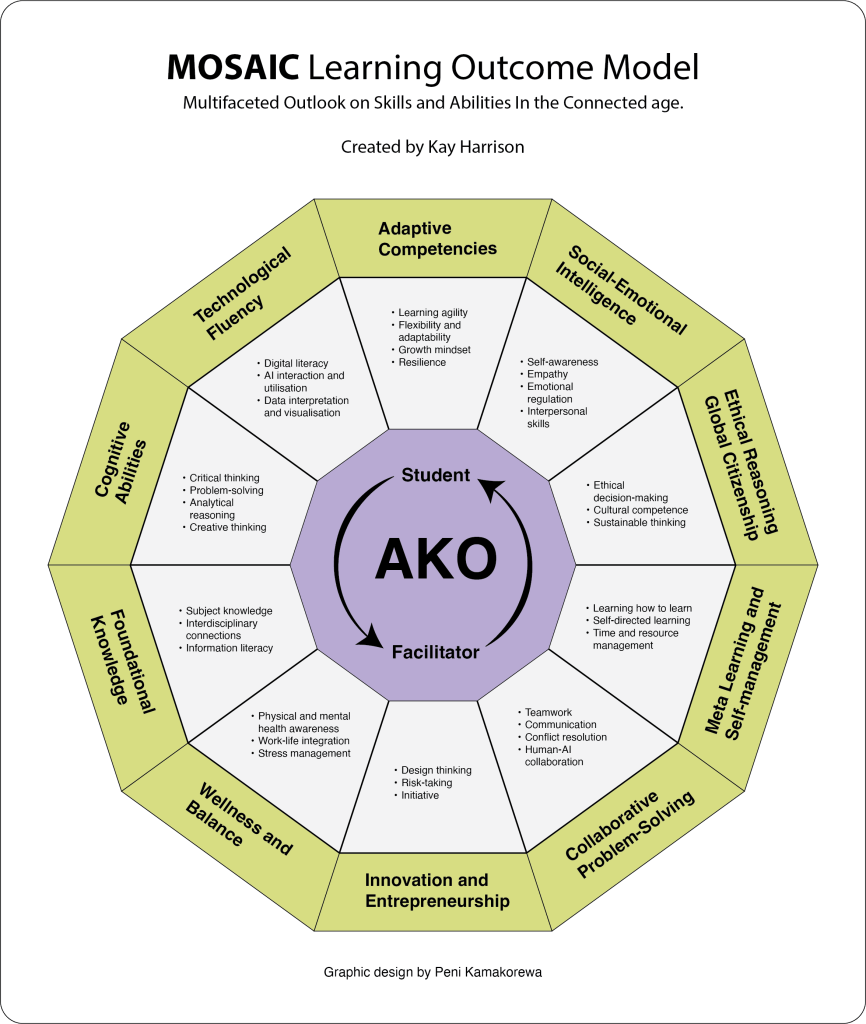
Using the MOSAIC framework we can brainstorm skills that we would like to learn. For example:
I need to increase my technological skills. What specific skills will I gain from this learning opportunity and will it benefit my personal or professional growth?
I need to improve my social-emotional intelligence skills. What can I learn and apply to my current job or future career aspirations?
This approach aligns with the evolving needs of employers. They increasingly seek people who are capable of critical thinking. They also value interdisciplinary collaboration and creative problem-solving. It also acknowledges the increasing issue of complex or wicked problems, like climate change and global health and the need for a transdisciplinary approach for solving these challenges.
As we travel through our learning journey, it is crucial that we regularly reassess and update our learning goals. This practice keeps us relevant and responsive to real-world demands. At the end of the day, it’s about preparing ourselves for a world where we need to think critically. We should work with a range of people and apply what we know in creative ways. It’s about being ready for jobs that might not even exist yet!
When considering these questions for yourself, the key is to make them feel accessible and relevant to you. Be thoughtful about your learning journey without it becoming overwhelming.
Enjoy!
To receive these post straight in your inbox, please subscribe. You will receive an email asking you to confirm your subscription.
 Loving Change and All things Learning
Leave a comment