
Just like many things in our life, we need to take responsibility for our on-going learning. Yes, the learning that takes place after we leave high school. This is when the real learning for life takes place. We are still getting used to what having GenAI in our lives means, and at the fast pace that it evolves we may never fully be at a place where we feel we have caught up or can keep up. But what it important is that we keep learning to be aware so we don’t get caught out. So we can recognise or understand that a photo or video isn’t real, we can recognise a scam because we have some understanding of how technology can be used.
We need to continue learning to prevent our wonderfully complex brains from atrophying. Using AI to support us in tasks of all sorts is useful, efficient and fun, however it’s only useful if we are aware of what we are offloading cognitively, and continuing to use our brains for other tasks. The Flynn effect refers to the observed phenomenon of rising IQ scores over time across many populations. Named after psychologist James R. Flynn, who studied this trend, the effect suggests that average IQ scores have increased significantly from one generation to the next, particularly throughout the early 20th century. Then, from the 1970’s, the IQ scores started decreasing. What happened in the 1970’s? People started using the calculator. Now there is nothing wrong with using a calculator, what is wrong is that we offload our mathematical tasks and don’t use our memories and brains in other ways. If we don’t exercise our muscles will weaken and won’t support our health. The same is true for our brains, it needs consistent exercising and working out.
The following story illustrates how and why it’s important to keep learning, if you prefer to listen to the story, scroll down to listen to the avatar tell it.
Once upon a time, in a bustling village, there was a weaver renowned for his beautiful tapestries. His patterns were intricate, his colours vibrant, yet over time, he noticed something strange. The threads he once used—strong but rigid—began to snap under tension, while his competitors’ tapestries, woven with flexible, interconnected strands, endured.
Curious, he asked an elder weaver for advice. The elder smiled and said, “The future belongs not to those who master and cling to a single thread, but to those who master a thread and look beyond to weave many strengths with adaptability, knowledge with curiosity, and skill with wisdom.”
The weaver understood: the strongest fabric wasn’t made of isolated expertise but of threads that crossed disciplines, blended ideas, and adapted to change. He began combining silk with wire, tradition with innovation, and logic with creativity. Soon, his tapestries didn’t just hang on walls—they moved with the wind, repelled storms, and even told stories that changed with the light.
Like the weaver, we need to future-proof ourselves not by clinging to what we know, but by broadening our thinking and embracing new ideas. One of the best ways we can do this is by understanding how we learn, emracing the idea of lifelong learning and, most importantly, taking responsibility for our own learning and weaving our own tapestry.
How we learn – A Simple Overview
Our brains are incredibly clever and complex, but let’s break down how they work in simple terms. Our brains are considered the best computers in the world, but just like a computer, it helps if the user understands how it works and knows what input to give it, to get the best out. We absorb information through our five senses which is then processed by our working memory.
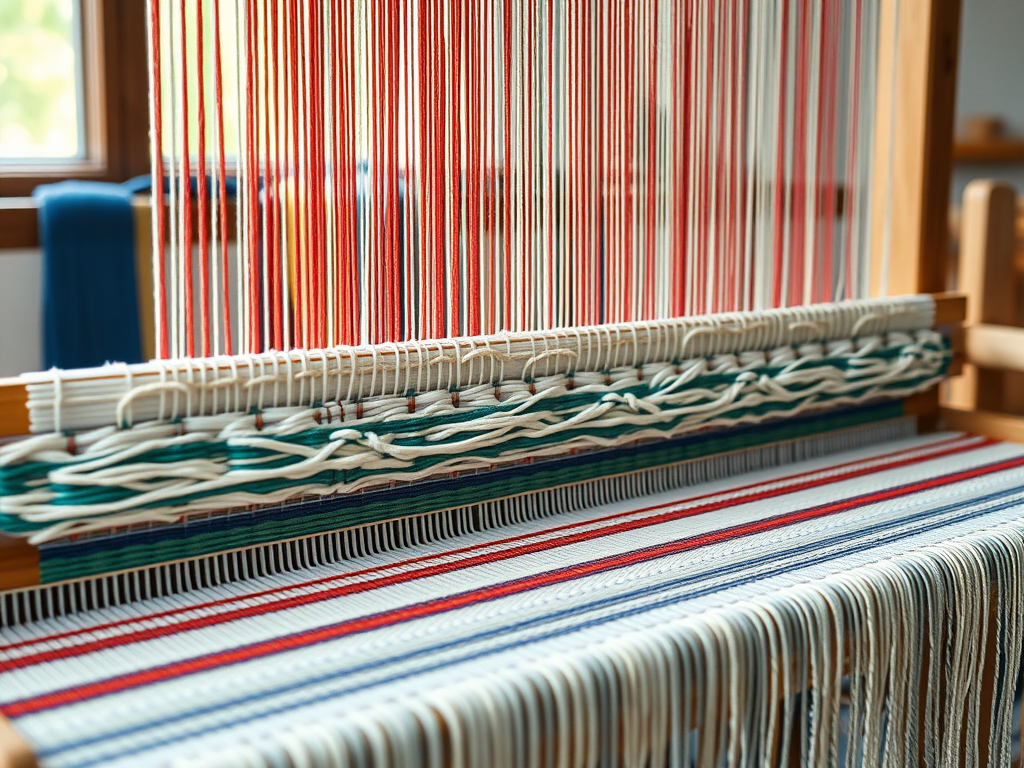
Let’s carry on the weaver’s story as a metaphor for how our brains work. Let me first explain how a tapestry loom works. It is a simple frame of taut vertical threads (the warp) over which a shuttle (boat-shaped tool) carries horizontal threads (the weft), weaving them back and forth to build up colour and pattern. After each pass, a comb-like beater presses the weft snugly into place, while the loom briefly lifts alternating warp threads (shedding) to create a clear path for the shuttle. Over hundreds of passes, those interlaced threads form a strong, flexible fabric whose design emerges from the careful choice and placement of each coloured yarn.
Working memory
Think of your working memory like the shuttle’s cargo full of neurons. Every new fact, idea, or experience you take in (through sight, sound, touch, smell, taste) lands in your working memory, the shuttle is loaded up with a fresh length of coloured yarn or thousands of connected neurons which is holding all the information..
Long Term memory
Our long term memory are the warp threads. On the loom the vertical warp threads are already strung tight; they form the stable frame for your tapestry. In your brain, long-term memories are like these warp threads: pathways already laid down from previous learning.
Forming connections
The weaving is like the neurons forming connections. When we send our loaded shuttle across the warp, it weaves the yarn over and under those fixed threads and creates a path. Similarly, when you focus on a new idea, your brain actively links the ‘fresh yarn’ of working memory into the existing network of long-term pathways. The more we retrieve that information the stronger and bigger the pathway, until before we know it, we are completing the task without even thinking.
Remembering and Retrieval
The key to being able to remember, to being able to learn and expanding our creativity and knowledge is in being able to retrieve or access information that is stored in our long-term memories. The more times the connected neurons travel the neural paths the bigger the pathway and the easier it is for us to remember and use that information for other purposes.
We give the neurons opportunities to create bigger pathways through repetition and practice. Going back to our weaver metaphor, this happens on the loom when we beat the weft tight. After each shuttle pass (neurons on the pathway), the weaver uses a comb (the beater) to push the thread snugly into place. This is your repetition and practice – every time you revisit an idea or apply it, you’re pressing that new yarn tight against the old, making the connection stronger and the pathway wider.
Repitition and practice can seem tedious, but it’s about making habits. You don’t become a long-distance runner overnight. You start with short runs, build stamina, and push through discomfort. Learning works the same way—it takes gradual buildup, discipline, and persistence. Some days are tough, but each day brings you closer to your goal.
Another example of practising when you are learning to cook. At first, you just following instructions and make mistakes, the sauce curdles or you burn something. But over time, you understand the ingredients, techniques, and timing. Eventually, you can improvise with confidence. Learning, like cooking, is messy, iterative, and deeply satisfying when it all comes together.
Creating those pathways
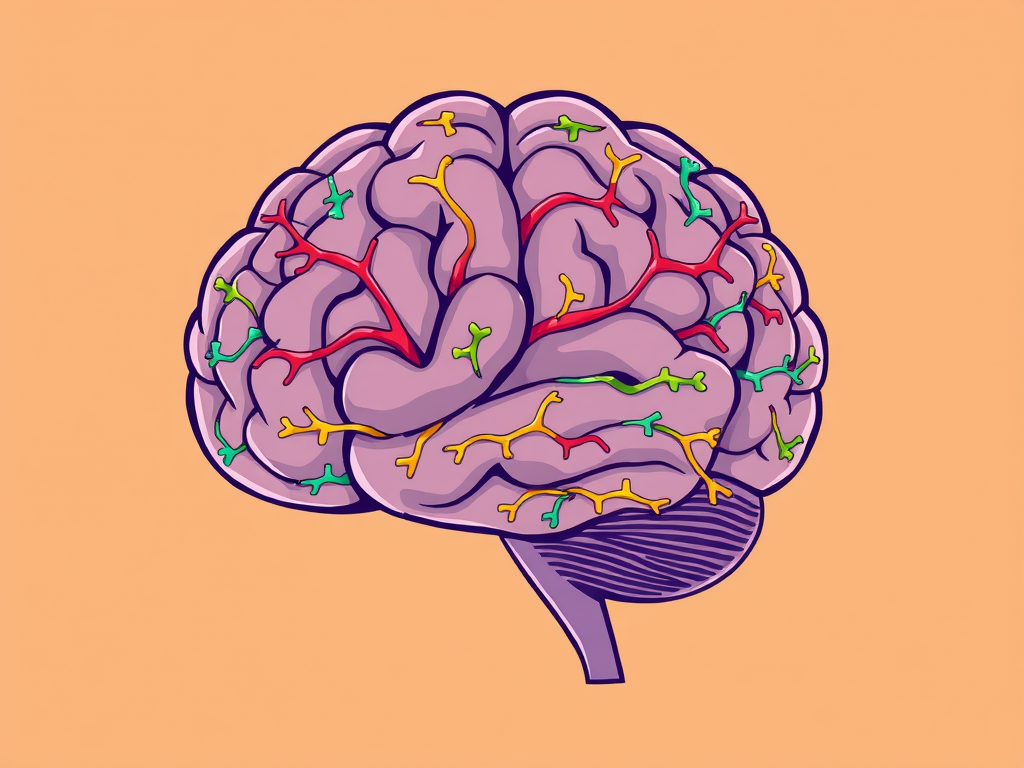
Shedding on a loom is like creating the pathway for learning. When working on the loom, you briefly lift alternating warp threads to create a shed (a clear gap) for the shuttle to pass through. In your brain, that’s getting into the right mindset or ‘unlocking’ focus by setting aside distractions or tuning into a particular topic, you open up a clear channel for new information to slide right in.
We have two modes of learning. One is focused and the other diffused. Focused mode is where you concentrate intently on a specific problem or topic, directing your full attention and working through details step by step. Like meticulously guiding the shuttle across the loom, thread by thread. When tackling complex problems, it helps to work in focused bursts (like 25 minutes), then take a short break – this is the Pomodoro Technique. In effect it gives the brain a rest and gets it ready for another workout.
The diffused mode is a more relaxed, open state which allows your mind to wander and form broader connections – similar to stepping back from the loom to view the emerging pattern, letting your brain weave unexpected threads together into fresh insights. When I’m going for a run, I find my brain switches quite easily into this mode and I can think of such good ideas.
Expertise and Creativity
A near completed tapestry (‘near completed’ because we never stop learning) shows off our expertise and creativity. Eventually, hundreds of shuttle passes interlace into a bold, complex tapestry. Likewise, as you keep learning – connecting new threads to old – your mind becomes richer, more flexible and capable of weaving entirely new patterns.
As life-long learners, we need to take responsibility for our own learning. Knowing how to learn and achieving gives us an inner and quiet confidence. We aren’t anxious because we know how to survive. This quiet confidence allows us to feel content knowing we have the power and ability to change circumstances. This leads to being content.
Using GenAI wisely
Remember, using the calculator wasn’t or isn’t a bad thing to do, just as using GenAI isn’t a bad. But we do need to be wise in how we use it ethically and for our benefit, not off loading our cognitive exercises and allowing our brains to turn to mush. Consider our story of the weaver, we can use GenAI in the following ways:
Colloboration: Being open to new ideas and new connections. Think of the shuttle as GenAI. Just as the shuttle transports each weft thread acros the warp, GenAI can ferry ideas-say, a data science technique-directly into a completely different field, like design or ethics and support collaboration in brainstorming.
Efficiency: Traditional weaving is a slow process, deliberate and manual. A weaver might switch shuttle colours dozens of times to get the right pattern. GenAI can instantly ‘load’ new threads of knowledge and test countless combinations, revealing novel patterns at machine speed. However, it can and does get information wrong, it hallucinates. So we still need to have enough knolwedge to recognise when it’s wrong and make those connections.
Empowerment: The loom and the weaver’s skill still matter. GenAI doesn’t replace your creativity; it hands you a turbo-charged shuttle, so you can focus on designing richer, more connected patters in your personal learning tapestry.
As you go about your day I encourage you to seek diverse learning experiences, challenge your comfort zone and form consistent learning habits.

Have a Great Day
To receive these posts straight in your inbox, please subscribe. Remember to look in your inbox as you will receive an email asking you to confirm your subscription.
References:
Oakley, B., Rogowsky, B,. and Sejnowski, T. (2021). Uncommon sense teaching: Practical insights in brain science to help students learn. Penguin Publishing Group.
Brown, P.C., Roediger III, H.L., and McDaniel, M.A. (2014). Make it stick: The science of successful learning. The Belknap Press of Harvard University Press.
Dehaene, S. (2020) How We Learn. The New Science of Education and the Brain. Penguin Books.
 Loving Change and All things Learning
Leave a comment