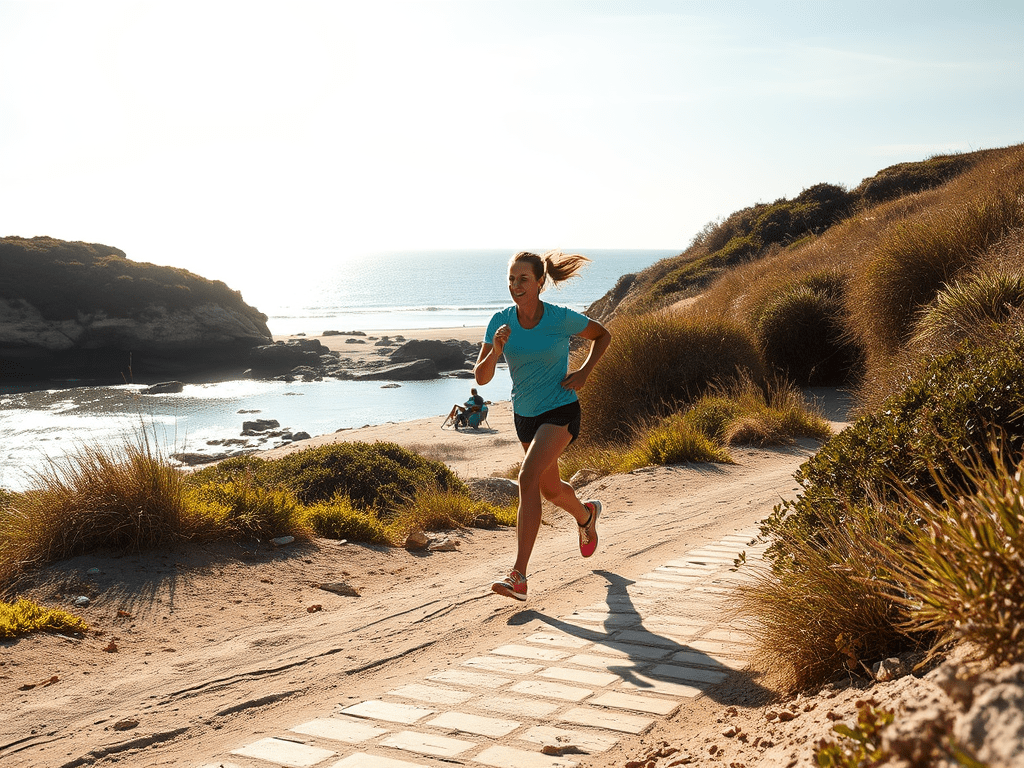
What if the secret to lifelong health started with your big toe? It sounds unlikely, but it turns out that small changes and a willingness to embrace discomfort can have an impact far greater than we expect. Stay with me. 😊
This is what Loving Change and all things Learning is all about, identifying those small changes that improve our wellbeing and enable us to give back to our communities, working together to make our world a better place.
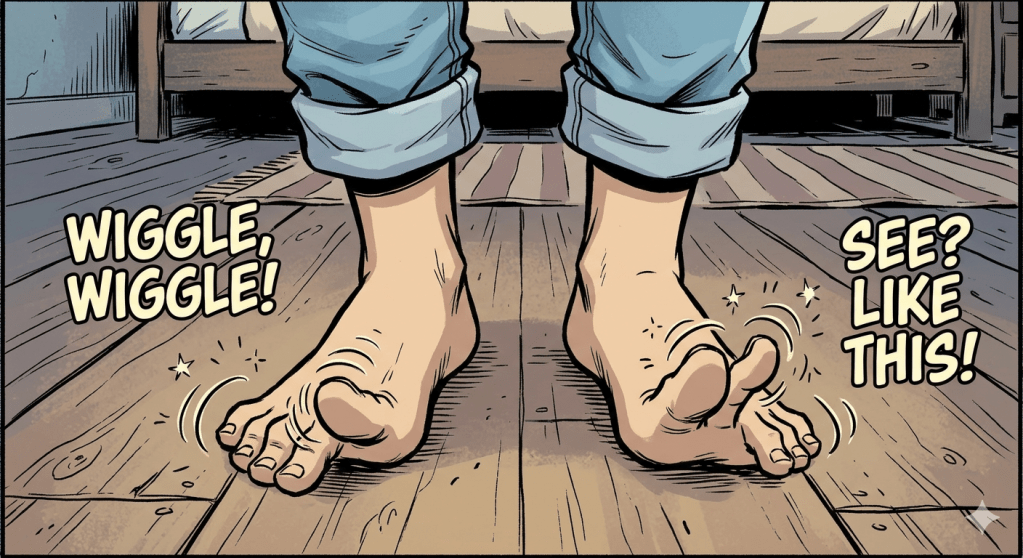
So, when I heard that exercising our big toe, yes you read that right, exercising our big toe can make a huge difference to our overall health I was intrigued and wanted to know more. Dr Courtney Conley from Gait Happens spoke on Dr Chatterjee podcast Feel Better Live More. She advocates that our big toe is “the most important joint in our body” and she links foot health to long-term neurological outcomes.
Listen to the podcast for the full download, but the point I’m making is that identifying or adding just one small change to our routine can have a huge impact.
I was listening to this podcast and feeling inspired about the health of my toes, my feet and general wellbeing just before participating in a local running/walking event. I enjoy participating in a half marathon event each year with friends. We decided several years ago that it was the perfect way to keep us moving as we mature in years and has an added benefit of getting together – we are great friends and live in all parts of the country. Coming off the back end of an injury last year I have been slowly building my fitness up. The local event I was running/walking was 14km. In the past I have completed many half’s, a full marathon and recently have been comfortably completing a 10km each week for the past six weeks. So I wasn’t feeling fazed by the distance and was keen to participate as it was good timing to increase my distance with the half looming mid-May. At 8.20am the gun signalled the start and off we went. knowing my fitness is still building I started with a slow jog, intent on enjoying myself and not wanting to break any records. Before too long it was too hot to run, so I walked, it was so humid I felt like I couldn’t breathe, so I gasped … and enjoyed the beautiful surroundings. The route took us down the beach around the peninsula and followed an estuary. At 11km something happened, remember I had been doing 10k only for the past six weeks so I was past my comfort zone. Two hot spots on my foot started warning me that blisters were in progress, my legs felt like wood, my chest tight and I decided I was tired and perhaps I didn’t want to continue. 😊 I carried on, pushing to keep my pace the same and counted the last three kms step by step. The last kilometre felt like three and the finish line couldn’t come quicker.
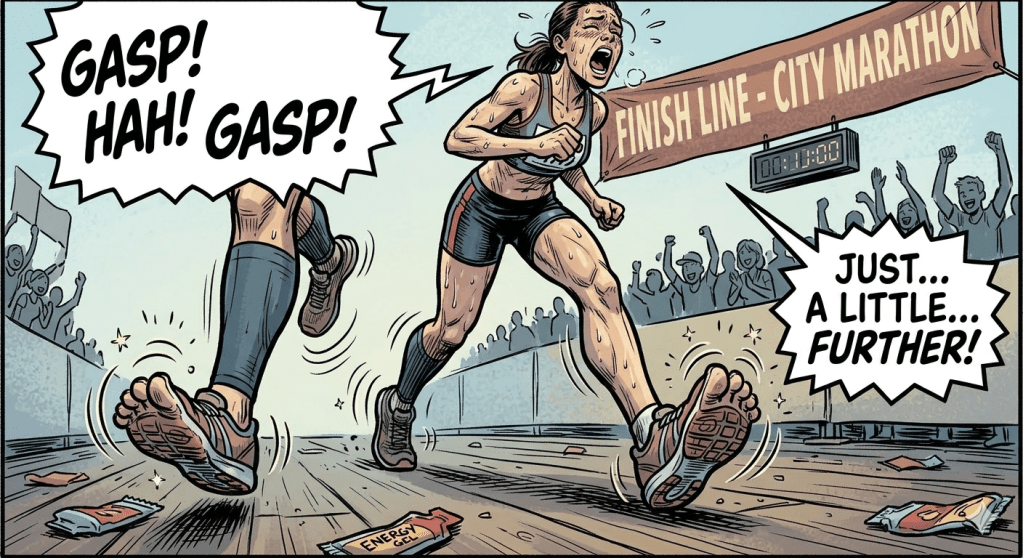
I was so relieved to have finished and quickly took a dip in the Pacific Ocean to lower my inner temperature. I was musing how confident I had felt at the beginning and how wrecked I felt at the end, a humbling experience. One that helped me realise the amount of work or training I need to increase to be capable of walking a half marathon in May and felt inspired to add some big toe exercises to my training.
This is a lovely story but the point of it is that we need to find areas to push ourselves outside our comfort zone, ever so slightly enough for us to learn and grow from. It is this personal growth that adds to our wellbeing and our ability to participate in our communities. I have been a firm advocate of putting ourselves in situations where our physical endurance is tested. In a safe way 😊 This type of physical activity not only shows us our physical capabilities but gives us mental stamina. Michael Easter in his book Comfort Crisis takes this a step further and explores the idea that modern society is currently in a “crisis of comfort,” where the removal of traditional life discomforts, such as hunger, boredom, and physical struggle, has contributed to significant physical and mental health issues. Easter argues that humans have evolved to require certain challenges, and living in “progressively sheltered, sterile, temperature-controlled, overfed, underchallenged, [and] safety-netted lives” has made us less resilient and more prone to “diseases of despair” like depression, anxiety, and addiction.
As humans we automatically search for the path of least resistance, whether it is physically or intellectually like when we are studying or learning something new. It takes a conscious and deliberate choice to follow the discomfort path, even for a short time.
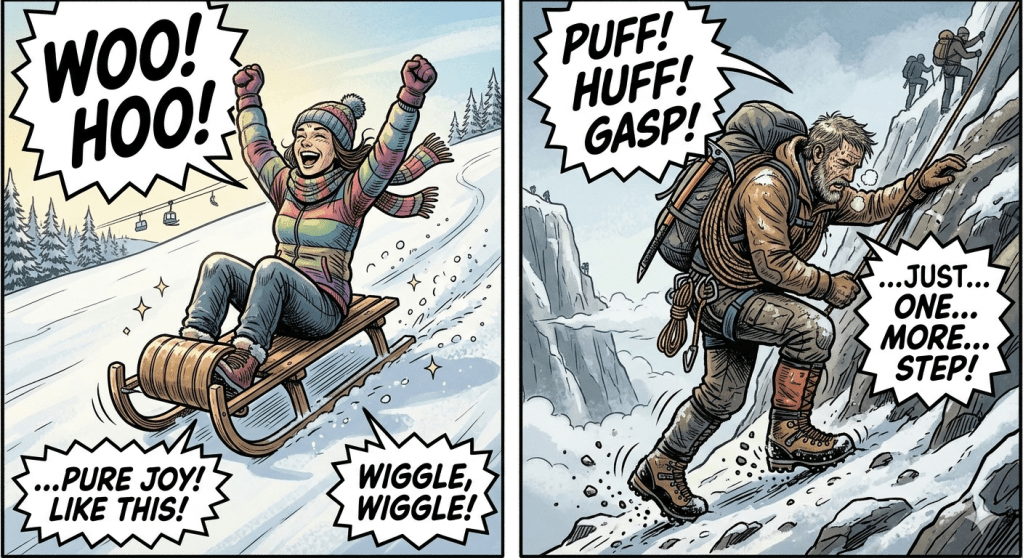
Whether you’re adding big toe exercises to your morning routine or signing up for a race that scares you a little, small changes and a willingness to embrace discomfort can have an impact far greater than we expect. We don’t need to overhaul our lives, we just need to keep finding the next small hard thing. What discomfort are you going to embrace this week?
To receive these posts straight in your inbox, please subscribe. Remember to look in your inbox as you will receive an email asking you to confirm your subscription.
Images are generated by Nano Banana 2 (Gemini 3.1 Flash Image) via Google Gemini.
This post was lightly edited for grammar, but all ideas, wording, and opinions are my own.
 Loving Change and All things Learning
Leave a comment