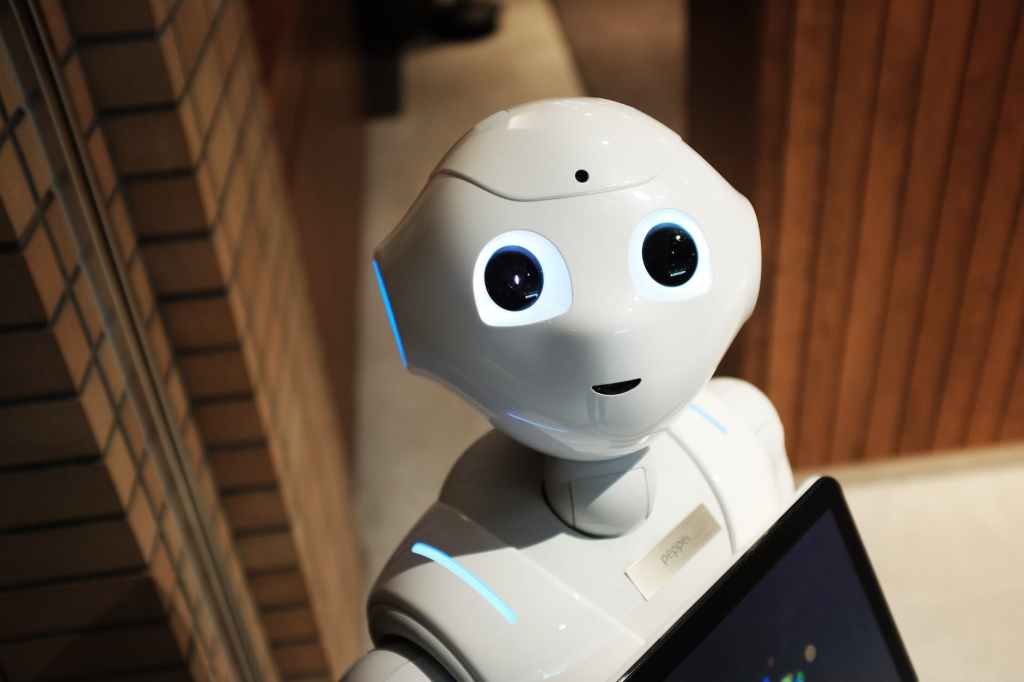
“The generation of young people that are starting primary school this year […]-with their new school bag and their new school shoes and their shiny new lunchbox-[…] is the first generation in history to not experience education without ChatGPT.” Professor Cath Ellis (UNSW).
In November 2022 ChatGPT an artificial intelligence language model was released and in higher education the field I currently work, it sent teaching staff into a spin. They were suddenly faced with an unprecedented situation and were caught off guard with no guidelines or policies to fall back on. Many teaching staff saw it as an opportunity for students to cheat and were concerned with academic integrity. Others embraced the opportunity and pivoted quickly to teach students how to use ChatGPT and used it in their assessments. The conversation on keeping up to date with Generative Artificial Intelligence (Gen-AI) is global and at the top of everyone’s reading and webinar list. I felt it was remiss of me not to join the party and write something.

An ever optimist I became excited at the prospect of how much ChatGPT can help neuro-diverse students, and the opportunities it brings for students in education. A friend of mine who is a lawyer and been practicing for 30 years, also has dyslexia. They started using ChatGPT and said it totally changed their life. For many students using ChatGPT will level the playing field and make study more equitable. For many people around the world, Gen-AI opens doors and brings education so much closer and achievable, I am thinking of access to research and general courses through AI translators. Once we learnt and became familiar with how ChatGPT functioned, the realisation dawned on us that AI is here to stay and this is the start of a new way of life, a new way of doing things. We need to change our mindsets and accept that we are experiencing a paradigm shift, a massive disruption causing society as we know it too never be the same. I became excited and thrilled at the prospect that we may finally see a much-needed change in our education system.
What is ChatGPT?
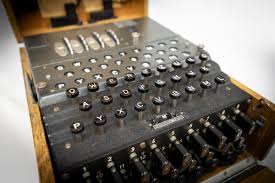
For those who have not been swamped with information on Gen-AI, ChatGPT is a large language model developed by OpenAI. It is an AI chatbot that uses natural language processing to create humanlike conversational dialogue. ChatGPT 3 was released in November 2022, however it is not really a new thing. Artificial intelligence has been around for a long time, since the 1950s in fact. The British mathematician Alan Turing is considered the founder of AI and computer science and proposed the idea of a thinking machine. In the 1990s-2000s machine learning gained prominence as a subfield of AI, emphasizing algorithms that allowed computers to learn from data. The 2000s-2010s saw a rise of practical AI applications. With the exponential growth of data and computing power, AI applications found success in areas like web search, recommendation systems, speech recognition and computer vision. It’s been around for so long we haven’t taken a whole heap of notice of its advancement and inclusion in our lives, mainly because it’s been useful and helped us, like using maps or a GPS to help us find our way around.
Like with my friend the lawyer who I mentioned earlier, ChatGPT can be a huge positive in education. It can be used as a brainstorming and collaborative tool, it gives students access to support 24/7, imagine a student who is studying part time while working full time, they end up studying late at night and not able to collaborate or brainstorm with other students. ChatGPT can produce coherent and contextually relevant text to questions. It can understand and respond to user queries in a conversational manner, it is patient! 😊 Khan Academy (a not-for-profit organisation that provides tutoring) is looking at incorporating ChatGPT as a tutor, can you imagine a student being able to ask the same question 50 times and get a different answer each time without the teacher becoming tired or frustrated. Likewise, Professors at University of Pretoria have launched AE-Bot which uses ChatGPT-4 to help students understand accounting concepts. They say the personalised and accessible learning assistance was not possible in a class of more than 500. They liken it to students having a ‘tutor in their pocket’.
However, like any good thing, there is always limitations and aspects that we need to be aware of. ChatGPT has used data up to 2021 so information later than this date will not be accurate. It can be verbose and overuse certain phrases, so don’t copy and paste, always edit and make your writing your own voice. It can generate factually incorrect answers, you do need to know your subject to know whether the dialogue ChatGPT has generated is accurate.
Yes, in education we are being forced to relook at what this paradigm shift means to us. I believe it is requiring us to relook at why we have an education system and question whether it is still current. Artificial intelligence is here to stay and it’s up to educators to work out how to teach students in each discipline and be ready to enter the workplace. We need to be looking carefully at learning outcomes, and asking how relevant they are. Is there value in asking students to learn something or do something that a bot can do? Should students learning be based around training and how to use AI like prompting instead? And when it comes to assessment what is it we are actually assessing? Is it their knowledge or their ability to apply that knowledge. Many companies are already incorporating AI into existing and well-established products, and they will require employees to be fluent and literate in how to use the correct prompts for AI. If companies don’t adapt quickly or effectively, they will end up like Kodak in the late 1990’s. Kodak (a huge player in the photography world at the time) decided digital photography would never take off and made a very conscious decision not to purse this and offer it as a product. Within a short space of time, they had to close their doors and now they are a name of the past.

It is both an exciting and challenging time as we find ourselves being propelled into this change whether we like it or not. We are being forced to adapt and accept AI into our lives. Change is always difficult, but I keep looking at the positive aspects and hoping that we may see some radical changes in the future of education. I’ll finish by quoting a favourite from Dr Suess “Oh the places you’ll go, today is your day, you’re off to great places, your mountain is waiting so get on your way”.


 Loving Change and All things Learning
Leave a reply to kjharry Cancel reply