
Remember the last time you made a mistake that felt like the end of the world? Maybe it was a presentation that went sideways, or that time you confidently offered to cook your new in-law’s dinner, only to serve them a barely edible meal. That pit in your stomach, the racing thoughts – we’ve all been there. That moment when things don’t go as planned, and you feel like you’ve failed.

But what if failure wasn’t the end of the road, but rather a stepping stone to something greater? Neuroscience offers insights into how we can re-frame our perception of failure and leverage it for growth and adaptation. What if I told you that your brain’s response to failure could become your secret weapon for growth?
Dr Amy Edmonson in her book Right kind of wrong says we need to rethink our perception of failure and view it as a positive outcome to learning from our mistakes. She sees failure as a result or an outcome, not an ending and any perceived mistakes should never be blameworthy. She explains the three types of failure, intelligent, complex and basic. While intelligent failures push boundaries and advance knowledge, basic and complex failures teach us fundamental lessons.
An Intelligent failure is when a scenario or situation has been thought through, calculated and was unavoidable. A good example of this is Thomas Edison in his innovations with the light bulb. He tried over 1,000 different materials as filaments before finding one that worked effectively. He tested everything from platinum to bamboo to human hair. Each “failure” was an intelligent and methodical step in his process, teaching him valuable information about what wouldn’t work and why. Edison himself famously said about these attempts: “I have not failed. I’ve just found 10,000 ways that won’t work.”
A basic failure is one which could have been avoided, usually comes from a simple oversight or lack of knowledge. These types of mistakes usually have a simple cause-and-effect relationship, it’s easily understood, and the solution is clear. An example of a basic failure is baking a cake and forgetting to add baking powder to the mixture. The result would be a dense flat cake, still edible but not the expected light and fluffy consistency.
A complex failure is exactly what is sounds like, complex. It means that there are multiple actors and issues coming into play at the same time presenting multiple problems. You could call it the perfect storm. Parts of a complex problem will be factors outside of your control, and other parts will be a series of bad decisions made for whatever reason.
The Boeing 737 MAX crisis (2019-2020) serves as a perfect illustration of a complex failure. Multiple factors converged to create a catastrophic situation: technical design flaws in the MCAS system, inadequate pilot training, corporate pressure to compete with Airbus, regulatory oversight gaps, and communication breakdowns between various stakeholders. What began as technical issues with a single system cascaded into multiple crashes, a global grounding of aircraft, billions in losses, and a devastating blow to Boeing’s reputation. This wasn’t just one person’s mistake or a single bad decision – it was a complex web of technical, organizational, cultural, and regulatory failures all interacting with each other.
Understanding the Neuroscience of Failure – what happens in our brain
Now that we understand different types of failure, let’s explore what happens in our brains when we face these challenges. When we grasp what happens in our brain during stressful moments, it’s like having a road map through the chaos. It helps us work with our bodies rather than against it. This knowledge isn’t just interesting – it’s empowering. It gives us the tools to stop that downward spiral of negative thoughts and transform our perception of failure into something constructive.

Our brains are remarkably sophisticated, equipped with ancient survival mechanisms that have kept our species alive for millennia. But here’s the catch: while these mechanisms are brilliant at protecting us from physical threats, they can sometimes overreact to modern-day challenges, like making a mistake at work or fumbling during a presentation. The key lies in understanding this process so we can work with our brain’s natural responses, rather than against them.
When we perceive a threat, several things happen, lets break this down in simple terms:
First the Amygdala is activated. Picture your amygdala as your brain’s personal security guard. This tiny but powerful part of your brain is like that friend who’s always on high alert – sometimes a bit too much! When it spots what it thinks is danger (even if it’s just a presentation that didn’t go as planned), it immediately sounds the alarm. Before you can even think “Wait, is this really that bad?” your body’s already preparing for action, triggering the “fight, flight, or freeze” response.
Then comes the hormone rush – think of it as your body’s emergency response team. Your adrenal glands spring into action, first sending out adrenaline (epinephrine) like a first responder, quickly followed by cortisol, the stress hormone. Together, they’re like a dynamic duo preparing your body for whatever challenges lie ahead – even if that challenge is just facing your boss after a minor mistake.
Finally, there’s what happens to your thinking brain – the prefrontal cortex. Imagine your brain as a computer that suddenly diverts all its power to running its security system. When this happens, the part of your brain responsible for calm, rational thinking (your prefrontal cortex) gets less “processing power.” This is why it’s so hard to think clearly when you’re stressed – your brain is too busy trying to keep you safe!
Rewiring Your Brain for Success
The good news is that our brains are incredibly adaptable, thanks to neuroplasticity. And when we understand what is happening, we can more easily rewire our brains to respond to failure in a more constructive way. In her book The Scout mindset, why some people see things clearly and others don’t, Julia Galef describes two mindsets that we naturally adopt. Either a soldier mindset or a scout mindset. Understanding benefits of adopting a scout mindset can help with rewiring our brain to cope with failure more readily.
Imagine two professionals facing the same setback. The soldier immediately becomes defensive, viewing the failure as a personal attack. The scout, however, pulls out their metaphorical notebook and asks, ‘what can I learn from this?”
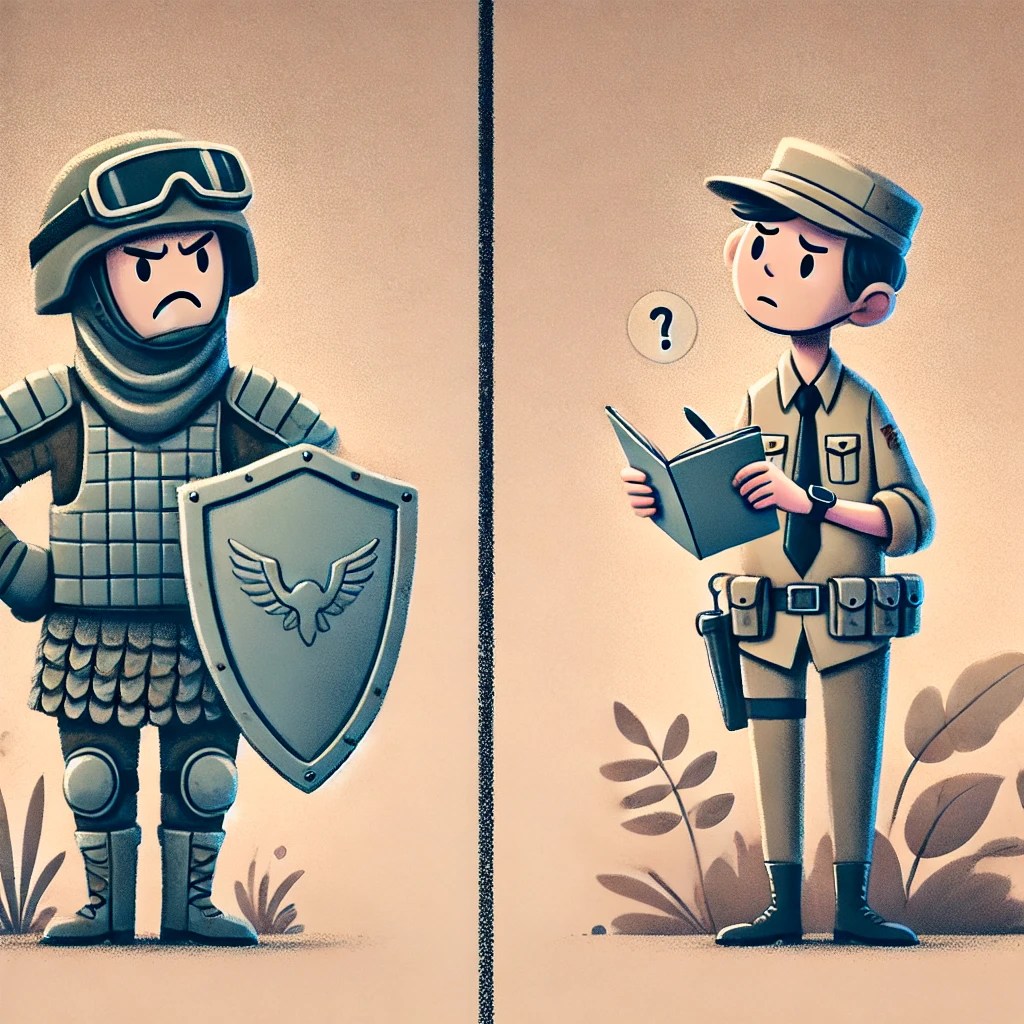
Here’s how we can rewire our brain to see failure as a learning opportunity:
Embrace a Growth Mindset: While a fixed mindset sees failure as proof of limitations, a growth mindset views it as a springboard for development and innovation. This shift in perspective aligns beautifully with Julia Galef’s concept of the ‘scout mindset’ versus the ‘soldier mindset.’ Where a soldier mindset defensively protects existing beliefs and sees failure as a threat (much like our amygdala’s initial response), a scout mindset approaches challenges with curiosity and openness, gathering information rather than defending territory.
By cultivating both a growth mindset and a scout’s perspective, we can transform our brain’s automatic stress response into a more measured, inquisitive approach. Instead of asking “Why did this happen to me?” we learn to ask “What can this teach me?” This mental shift doesn’t just change how we feel about failure – it creates new neural pathways that make us more resilient and adaptable in the face of future challenges.
The difference between staying trapped in a soldier mindset versus embracing a scout’s perspective often comes down to how we choose to respond to failure. Many talented individuals fall into the soldier’s trap – protecting their ego by holding back, preferring the safety of inaction over the risk of disappointment. But there’s a more empowering path forward.
Think of your brain as a learning laboratory rather than a battlefield. When we adopt a scout’s curious approach, we can:
- Transform Our neuro-chemistry. Instead of letting cortisol dominate our response to failure, we can leverage our brain’s reward system. By treating each setback as a clue or stepping stone, we release dopamine – our brain’s natural motivator. This creates a positive feedback loop, making us more resilient and eager to explore new possibilities.
- Cultivate Strategic Calm. A scout doesn’t panic at unexpected information – they pause, observe, and analyze. By practicing what we call “deliberate calm” through mindfulness and conscious breathing, we can prevent our amygdala from hijacking our response. This keeps our prefrontal cortex online, allowing us to think clearly and strategically even under pressure.
- Embrace Agile Learning. Just as a scout constantly adapts their map based on new terrain, an agile mindset allows us to pivot quickly when faced with setbacks. Instead of getting caught in what psychologists call a “post-trauma loop,” we can treat each failure as a training ground for future success. This might mean:
• Intentionally seeking challenging situations to build resilience
• Viewing mistakes as data points rather than dead ends
• Using setbacks as opportunities to refine our purpose and direction - Transform Endings Into Beginnings. When major failures occur – whether in careers, relationships, or personal projects – a scout’s mindset helps us gather valuable intelligence rather than retreat in defeat. Every ending becomes an opportunity to:
• Extract valuable lessons from the experience
• Identify transferable skills and insights
• Find ways to use our experiences to help others navigate similar challenges.
Remember, the goal isn’t to eliminate the discomfort of failure – it’s to transform our relationship with it. By reducing the grip of shame and guilt, we open ourselves to genuine learning and growth. Just as a scout takes regular breaks to review their maps and findings, we too should pause periodically to reflect on our experiences, helping us recognize patterns and avoid repeating the same mistakes.
The next time you face a setback, pause for a moment. Take a deep breath. Ask yourself: “Am I approaching this as a soldier or a scout?” Choose curiosity of defensiveness, learning over fear. Your brain and your future self – will thank you for it.
To receive these posts straight in your inbox, please subscribe. Remember to look in your inbox as you will receive an email asking you to confirm your subscription.



 Loving Change and All things Learning
Leave a reply to Anonymous Cancel reply