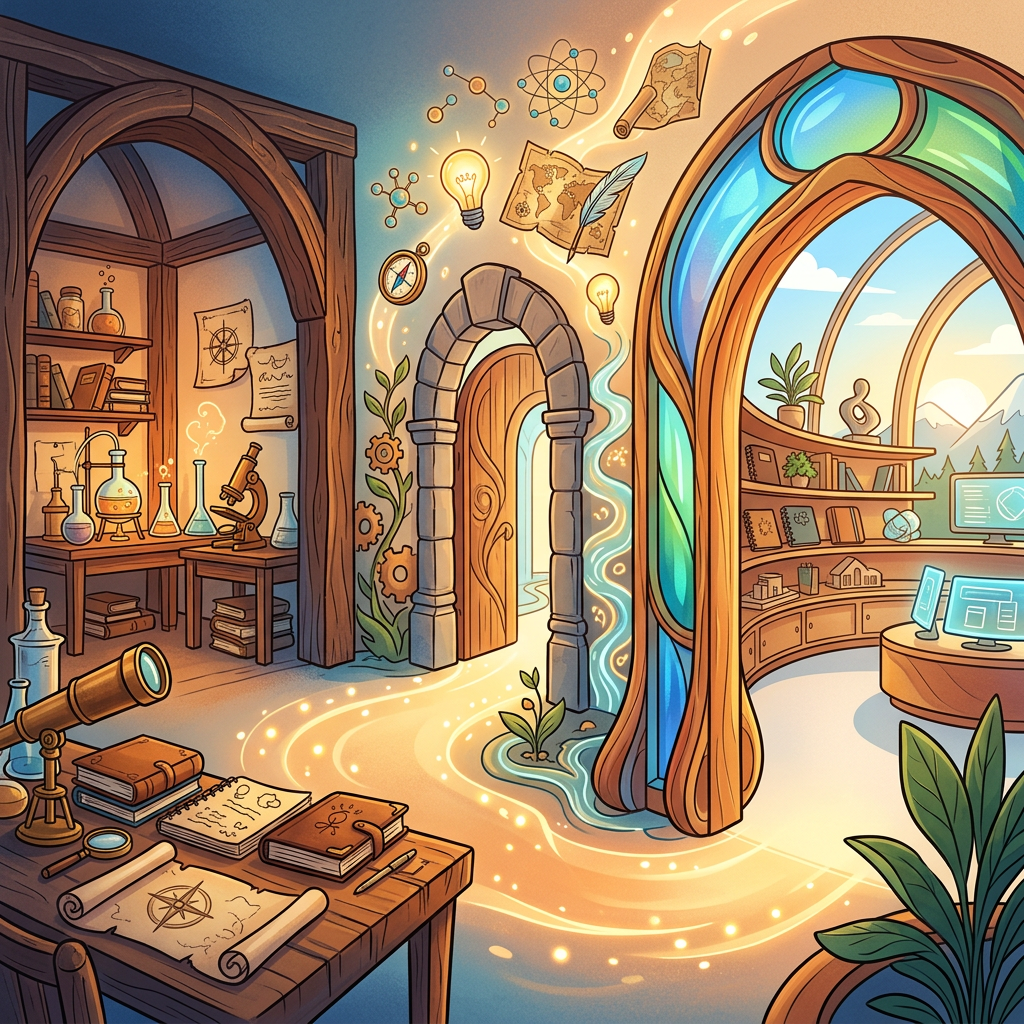
I recently heard a story about an architect who was trying to work out a solution to a building problem. They decided to use AI as a thought partner and explained the problem to an agent, but instead of asking for the solution, they asked for an image of what the solution could look like. An image was produced, and the architect was able to visualise it and work out the solution themselves. I was struck by the architect’s thinking, and by the prompt they used, they didn’t ask for the solution, they asked for an image, and from there they were able to work it out on their own.
Why this was interesting wasn’t the fact that an image was produced, but the relationship the architect had with the AI in that moment. They weren’t extracting an answer from a tool, they were in dialogue with an agent, testing an idea back and forth the way you might with a colleague. How we relate to artificial intelligence is an area for exploration and one that we need to work out both individually and collectively. I have recently come across the term meta-relationality which explains a way of living and communicating that focuses on deep hidden connections. These connections show patterns that shape our relationships on a deeper level, rather than looking at surface-level words or actions. Understanding a concept such as meta-relationality is important for the world we are living in now, because if we view artificial intelligence as an object, like a search engine on steroids, we will ask questions that simply require surface level answers like asking for an answer without the reasoning behind it. If we approach artificial intelligence as a subject (like a person or colleague) we think of it as a thought partner and have the opportunity to increase our understanding and knowledge through curiosity and dialogue. We ask different types of questions such as what am I missing, what else could this look like, give me another perspective, help me understand. A bit like the architect’s question, it wasn’t “solve this for me”, it was “help me see this differently.”

Let us look at a simple example such as cooking and see how questioning may look. We might ask AI for a dinner recipe, and it will give us one, that’s the surface level question we would ask an object. Let me add there is nothing wrong with this type of question when used for the right purposes and at the right time. However, we don’t always have to stop there. We can push back and ask for a specific flavour, or a recipe with certain ingredients, or a certain method, like frying or slow cooking. We can change our minds and say, actually, I don’t want to use those ingredients, but I do want to use these. We can ask questions about different styles of cooking and what it would take to learn a new skill, a new way of cooking, putting new flavours together. Each of those follow-up prompts is a small act of relating to AI as a subject rather than an object, treating it as something to think alongside, not just something to extract from.
Asking the right questions is a skill, and one that has never been more important to maintain ethical and critical reasoning. With knowledge now so readily available, we need the skill to question how accurate that knowledge is, where it’s come from, what biases shape it, and whether we agree with it and how we can push the boundaries. Knowing whether something is right or wrong requires a certain depth of knowledge, ideally, we should be able to look at an answer and instinctively sense whether it holds up, but if we are unsure, we need to ask questions.
Going back to our cooking example, if someone is sautéing onions and the recipe calls for two cups of oil, they’d instinctively know that was a typo for two tablespoons. We can laugh about it, because getting it wrong wouldn’t really matter in this instance. But what if it did matter, what if it were a matter of life and death, as in the story of the Blue Baby Syndrome?

In the 1940s, thousands of babies died from a heart defect known as “Blue Baby Syndrome.” The medical community knew and accepted the fundamental rule that operating on a human heart was impossible. However, a paediatric cardiologist named Dr. Helen Taussig wouldn’t accept this rule. Noticing that some babies lived slightly longer if they had a second heart defect that kept a tiny artery open started asking questions and practising and testing different ways to sew tiny blood vessels together. In 1944, Helen and her colleagues broke the mold of the current thinking and shifted a paradigm in medicine turning an impossible medical rule into a solvable problem.
Dr Helen’s questions were not ego driven but fuelled by a deep empathy for someone else’s suffering. This outward facing empathy is the same philosophy as what underpins the wisdom of Indigenous knowledge and Seventh Generation principle. This philosophy takes that outward-facing empathy and stretches it across time. It teaches us that true wisdom is asking: How will the answers we accept today shape the world three generations from now?
Drawn from the philosophy of the Iroquois Confederacy, the principle holds that when making a decision, it’s important to look back three generations, understand the consequences in the present, and look forward to how the decision will affect the next three generations to come. To do this requires asking questions. Our inquisitiveness matters in most of the decisions we make. We need to keep asking why systems or practices exist the way they do, understanding the reasoning behind past decisions helps us avoid repeating the same mistakes. Real wisdom and depth of knowledge isn’t generated in a two-second AI prompt.
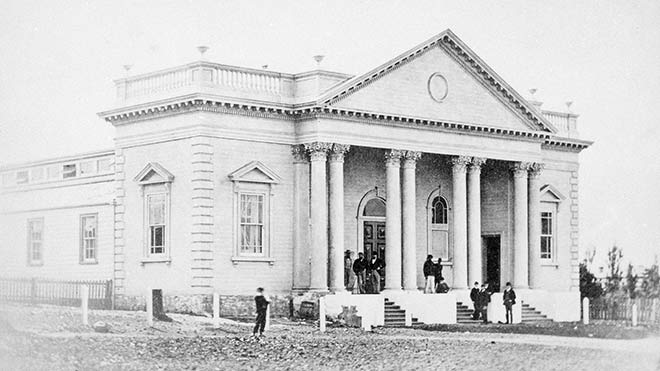
This idea, that our knowledge is built on layers of history from those who came before us was illustrated to me recently when I visited a friend whose office is in a newly refurbished building. The Old Choral Hall was originally built in 1872 and served as Auckland’s (Aotearoa, New Zealand) main concert venue until 1911, when it became part of the University of Auckland. Rather than hiding the building’s structural past behind clean, modern walls, the contractors cleaned and reinstated original brickwork from multiple historical eras, leaving it exposed as a feature. It’s beautiful and allows lets us remember the inherited knowledge of the past and appreciate what came before us.
AI has, in many ways, been forced upon us, and plenty of people would rather not take part. But this blog isn’t about whether AI is right or wrong, it’s about recognising how we can develop one of the most critical skills within ourselves which is asking the right questions. Just as the architect coaxed an image out of a machine through a deliberate, thoughtful prompt, we need to develop the awareness, curiosity, and care to think through, and take responsibility for the decisions we make and the impact they have on others and on the future.
To receive these posts straight in your inbox, please subscribe. Remember to look in your inbox as you will receive an email asking you to confirm your subscription.
This post was lightly edited for grammar, but all ideas, wording, and opinions are my own.


Leave a comment